Sewing Measurements Chart Women, Men, Kids: The Strategic Foundation for Precision Garment Construction
In the architecture of garment creation, precision is not merely an aesthetic preference; it is the operational baseline upon which fit, comfort, and professional credibility rest. For home sewists, independent designers, and educators, the transition from a flat pattern to a three-dimensional garment is fraught with variables. Among these, accurate body measurement is the most critical yet frequently mishandled variable. Relying on memory, inconsistent online sources, or disparate unit systems introduces friction into the creative process. A comprehensive Sewing Measurements Chart Women, men, kids serves as more than a reference tool; it is a strategic asset that standardizes data, eliminates cognitive load, and ensures consistency across projects.
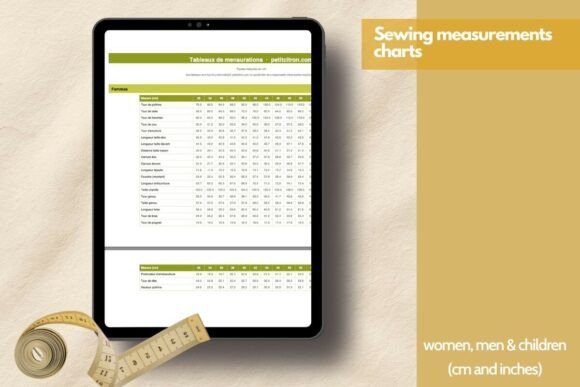
Stop guessing sizes. Sew with confidence. This mindset shift begins with having the right data at hand. A printable reference chart that consolidates standard body measurements for women, men, and children in both centimeters and inches allows practitioners to bypass the inefficiencies of mid-project research. By printing this document once and keeping it accessible in the sewing room, you establish a permanent, reliable source of truth. This approach supports long-term productivity and reduces the error rate in pattern selection and adjustment.
Standardizing Data for Operational Efficiency
The primary value of a unified Sewing Measurements Chart Women, men, kids lies in its ability to streamline operations. In any production environment, whether a home studio or a small boutique, time spent searching for information is time subtracted from creation. When working with international patterns, the discrepancy between sizing standards—such as French, US, UK, and Japanese systems—can lead to significant missteps. A pattern labeled size 10 in the US may correspond to a size 12 in the UK or a size 38 in France. Without a standardized reference, the sewist must constantly convert and cross-reference, increasing the likelihood of error.
By utilizing a chart that presents both centimeters and inches on the same document, you remove the need for mental conversion or external calculators. This dual-unit presentation is essential for modern sewists who often source fabrics and patterns globally. It facilitates immediate decision-making. When a client provides measurements in inches, but the pattern draft is in centimeters, the chart allows for instant comparison without breaking workflow. This seamless integration of data supports a higher level of professionalism and reduces the frustration associated with unit mismatches.
The Role of Consistency in Branding and Customer Experience
For entrepreneurs and small business owners in the fashion sector, consistency is a cornerstone of branding. Customers expect reliability. If a garment fits well in one order but poorly in another due to inconsistent measurement practices, trust erodes. Implementing a standard Sewing Measurements Chart Women, men, kids ensures that every garment is constructed against the same baseline metrics. This consistency enhances the customer experience, leading to higher satisfaction rates and repeat business.
Moreover, for sewing teachers and workshop leaders, providing students with a clear, easy-to-read layout of standard measurements establishes authority and clarity. It removes ambiguity from instruction, allowing learners to focus on technique rather than data verification. When educators use a shared reference point, communication becomes more effective, and learning outcomes improve. Students can confidently apply what they learn to future projects, knowing they have a reliable framework for sizing.
Strategic Application Across Demographics
A robust measurement chart must account for the physiological differences across demographics. The inclusion of complete measurements for women, men, and children in a single document reflects an understanding of the diverse needs of the modern sewist. Each group presents unique challenges and considerations.
- Women: Female sizing often involves complex curves and varying proportions. Standard charts provide benchmarks for bust, waist, and hip measurements, but strategic use requires understanding how these relate to pattern ease and fabric drape.
- Men: Male garments typically prioritize shoulder width, chest circumference, and sleeve length. Accuracy in these areas is crucial for structured items like shirts and jackets, where fit impacts both comfort and silhouette.
- Children: Children grow rapidly, and their proportions change significantly with age. A comprehensive chart includes height, weight, and key circumferences, allowing for adjustments that accommodate growth while maintaining current fit.
Understanding these distinctions allows for more intentional design choices. For instance, when sewing for children, one might choose to add extra length to hems to extend the garment's usable life. For men, focusing on precise shoulder measurements can prevent the need for extensive alterations later. By referencing the Sewing Measurements Chart Women, men, kids, sewists can make informed decisions about ease, allowance, and construction techniques tailored to each demographic.
Mitigating Risks Through Contextual Awareness
While a standard measurement chart is invaluable, relying on it without context carries risks. Standard sizes are averages, not absolutes. Human bodies vary widely in shape, posture, and proportion. Using the chart as a rigid rule rather than a guideline can lead to garments that technically fit the measurements but fail to flatter the wearer. Therefore, it is essential to approach the chart with a strategic mindset.
Before cutting fabric, consider the following:
- Individual Variation: Always take individual measurements when possible. Use the standard chart as a fallback or for initial pattern selection, but adjust based on actual body data.
- Fabric Characteristics: Different fabrics behave differently. A stretch knit will require different ease allowances compared to a woven cotton. The chart provides body measurements, but the sewist must determine the appropriate ease based on material properties.
- Pattern Specifics: Each pattern designer may have unique sizing standards. Compare the chart’s measurements with the specific pattern’s size guide to identify discrepancies before beginning construction.
By acknowledging these variables, sewists can use the Sewing Measurements Chart Women, men, kids as a starting point for analysis rather than a final verdict. This thoughtful approach minimizes waste, reduces the need for rework, and enhances the overall quality of the finished product.
Enhancing Creativity and Productivity
Paradoxically, structure fosters creativity. When the technical aspects of sizing are standardized and easily accessible, mental energy is freed for creative exploration. Knowing that accurate measurements are readily available allows designers to experiment with silhouettes, fabrics, and details without the underlying anxiety of fit uncertainty. This confidence encourages innovation and risk-taking, essential components of artistic growth.
Furthermore, productivity increases when workflows are optimized. A print-ready PDF that offers an instant download means that the resource is immediately available for use. There is no delay in waiting for shipping or navigating complex websites. The clean, easy-to-read layout ensures that information can be absorbed quickly, even in the midst of a busy sewing session. This efficiency compounds over time, resulting in more completed projects and a more satisfying creative practice.
Long-Term Value and Sustainable Practices
Investing in a high-quality Sewing Measurements Chart Women, men, kids aligns with sustainable practices. By reducing errors in sizing and fit, sewists minimize fabric waste and the environmental impact of discarded garments. Accurate fitting leads to garments that are worn and loved for longer periods, countering the culture of fast fashion. For educators and professionals, promoting accurate measurement practices contributes to a broader cultural shift towards quality and longevity in clothing.
Additionally, the durability of a printed reference chart ensures its long-term utility. Unlike digital files that may be lost or corrupted, a physical copy kept in the sewing room remains accessible regardless of technology status. This reliability supports consistent practice over years, making it a worthwhile investment for anyone serious about sewing.
Conclusion: Intentional Use for Superior Results
The Sewing Measurements Chart Women, men, kids is not just a list of numbers; it is a tool for strategic decision-making. Its value extends beyond simple reference, influencing operational efficiency, brand consistency, customer satisfaction, and creative freedom. By integrating this chart into your sewing practice, you establish a foundation of accuracy and confidence. Whether you are a hobbyist seeking better fit, a teacher aiming for clearer instruction, or a business owner striving for professional standards, this resource supports your goals.
Use it intentionally. Understand its limitations. Adapt it to your specific context. In doing so, you transform a simple document into a powerful ally in your creative journey. Stop guessing. Start measuring. Sew with precision and purpose.